Micah Olivas
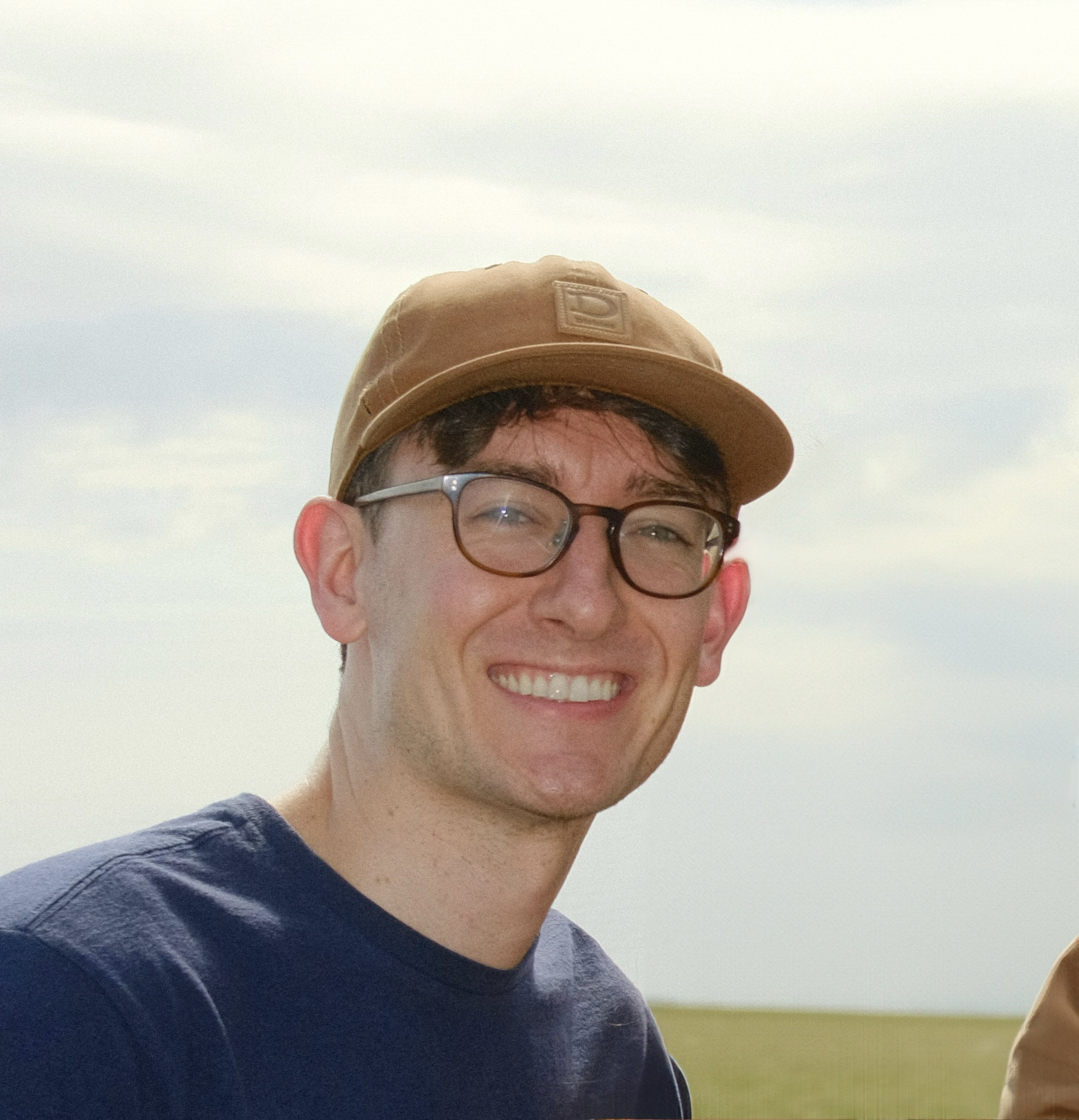
I’m a Genetics PhD student studying enzyme evolution in Polly Fordyce’s lab at Stanford University.
In my research, I use high-throughput microfluidics experiments to understand how amino acid sequence encodes enzyme function in both natural and model-designed proteins. Through this work, I hope to improve sequence-to-function prediction and provide insights into emerging foundation models for biology. I am grateful to be supported by an F31 fellowship from the NIH.
Research interests:
- high-throughput assay development for kinetic measurements of proteins
- inferring catalytic properties from evolutionary sequence data
news
| 26 Jul 2025 | From July 20-25, I attended the Gordon Research Conference on Enzymes, Coenzymes, and Metabolic Pathways in Waterville Valley, NH. I gave a talk about leveraging high-throughput microfluidics to characterize computationally-designed enzymes. |
|---|---|
| 15 Apr 2025 | I gave a lightning talk at the Chan Zuckerberg Biohub’s Interlab Confabulation in San Francisco, CA. |
| 10 Apr 2025 | From April 7-9, I attended the NHGRI Trainee Meeting in Philadelphia, PA and presented I presented recent work on a microfluidic strategy for library-scale genetic code expansion |
| 01 Apr 2025 | I presented work on microfluidic genetic code expansion at the Mutational Scanning Symposium in Barcelona, Spain. |
| 01 Jul 2024 | At the Coenzymes, and Metabolic Pathways Gordon Research Conference in New Hampshire, I presented work on generative design of acylphosphatases and won some travel money from ACS. |
| 01 Aug 2023 | I had a great time presenting my work on characterizing designed acylphosphatases at the Current Issues in Genetics (CIG) seminar series in the Stanford Genetics Department. |
| 01 Jul 2023 | I’m very grateful to receive a NRSA F31 fellowship from the National Human Genome Research Institute to support my research on sequence-to-function relationships in enzymes! |
| 01 Dec 2022 | During the NeurIPS Learning Meaningful Representations of Life workshop Clara Wong-Fannjiang and I presented our work on using protein language models to enhance thermostability and activity of acylphosphatases (Poster). |
| 01 Sep 2022 | At this year’s Genetics Department retreat, I presented a strategy to characterize a large library of enzymes designed by a newly-described protein language model (PDF). |
| 01 Nov 2021 | I passed my qualifying exam in the Genetics Department! |
| 01 Sep 2021 | I presented my rotation project in the Fordyce lab, in which I generated high-throughput kinetic measurements of human acylphosphatases (PDF) at the Stanford Genetics Department Retreat. |
| 01 Jul 2021 | I am thrilled to join Polly Fordyce’s group in the Departments of Genetics and Bioengineering! I will continue to work with the high-throughput enzymology team on a project I started at the beginning of my rotation in May. |
| 01 Apr 2021 | After spending the winter quarter with Serena Sanulli’s group, I will be moving on to another rotation with Polly Fordyce’s group. It was great to witness the formative weeks of Serena’s lab at Stanford. |
| 01 Feb 2021 | My rotation in the Steinmetz Lab has come to an end. I had a great time working on the TAP-seq pipeline with Andreas Gschwind, Dan Schraivogel, and others. |
| 01 May 2020 | I was awarded a graduate fellowship from the Honor Society of Phi Kappa Phi! |
| 01 Apr 2020 | After a round of socially-distanced interviews, I accepted an offer to join 23andMe Therapeutics as a Target Biology Intern for Summer 2020. |
| 01 Mar 2020 | New work on pooled CRISPR screens in an organoid model of lung cancer is out now in Nature! We demonstrate that 3D “spheroid” cultures of lung adenocarcinoma resolve phenotypic defects that arise in 2D monoloayer cell culture and apply genome-wide forward screens in these models to identify genes implicated in tumor growth regulation. |
publications
- Designing active and thermostable enzymes with sequence-only predictive modelsIn NeurIPS LMRL Workshop, 2022
- CRISPR screens in cancer spheroids identify 3D growth-specific vulnerabilitiesNature, 2020